
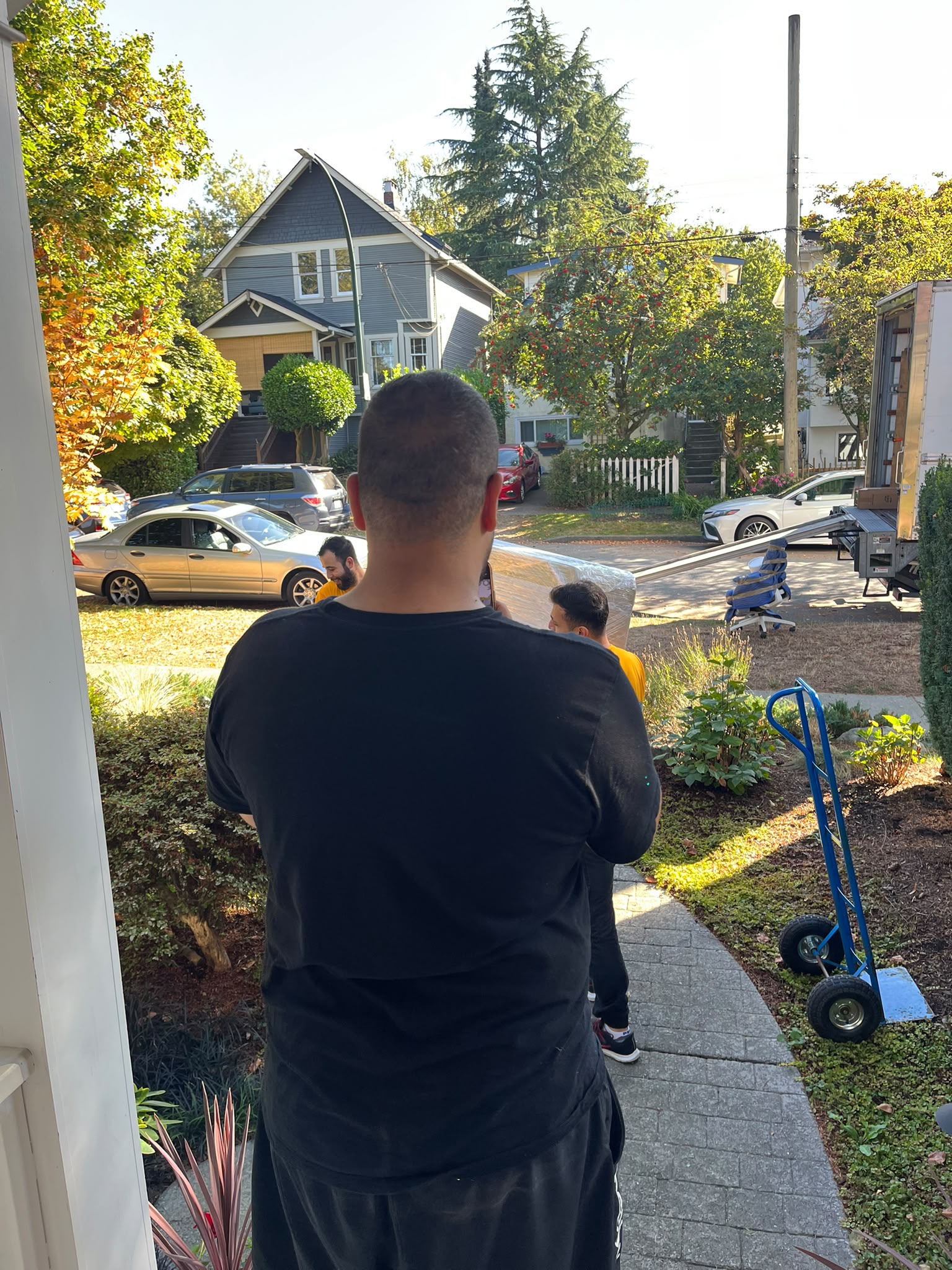
For a short, easy local move, $20 per mover is a reasonable, fair tip, and it sits comfortably within standard tipping guidelines. For a longer or more physically demanding job, $20 tends to fall on the low end, and most people tip more once they factor in the length and difficulty of the work.
Where $20 Falls on the Standard Range
Common guidance puts a fair tip at $5 to $10 per mover per hour, or roughly $20 to $50 per mover for a shorter job. Source: ConsumerAffairs A HomeAdvisor survey found that 31% of people typically tip between $10 and $20 per mover, meaning a $20 tip lands squarely within what a meaningful share of people actually give. Source: mygoodmovers
Cash, E-Transfer, or Something Else
Cash remains the most common and reliable way to tip, since it guarantees the money reaches the crew directly rather than being processed through a company system. Source: ConsumerAffairs If you don’t have cash on hand, ask the crew lead directly whether an e-transfer split among the team works, most crews are happy to accommodate this if you ask before moving day rather than scrambling at the end.
What a $20 Tip Actually Buys in Perspective
Twenty dollars per mover on a two-hour job works out to $10 an hour per person, roughly double the low end of standard hourly tipping guidance. Source: FreightWaves Checkpoint Framed that way, a $20 tip for a short job isn’t a minimal gesture, it’s a genuinely solid one that most crews would consider fair and appreciated.
When $20 Is Genuinely Enough
- A move that took two to three hours total
- A small apartment or studio with minimal furniture
- Easy access, no stairs, close parking, no long carries
- A straightforward job with nothing unexpected
For jobs like these, especially ones handled by our small movers Surrey team, $20 per mover is a genuinely appropriate, appreciated tip, not a low-ball one.
When $20 Starts to Feel Thin
If your move ran a full day, involved multiple flights of stairs, or the crew handled something genuinely difficult, a heavy safe, an awkward sectional, tricky weather, $20 tends to read as low relative to the actual effort involved. In these situations, most guidance points toward $5 to $10 per hour per mover instead of a flat number, which for a longer job naturally lands well above $20. Source: FreightWaves Checkpoint
The Calculation Worth Running
Here’s a real number. At $5 to $10 per hour per mover, a two-hour job comes to $10 to $20 per person, meaning $20 is actually at the higher end of fair for a genuinely short job. Stretch that same math to a six-hour job, and the equivalent range becomes $30 to $60 per person, meaning $20 no longer reflects the same proportional effort. The right tip scales with time and difficulty, not a single flat number that applies to every job equally.
Nobody Is Required to Tip At All
It’s worth saying plainly: tipping movers isn’t required, and it’s not a reflection of your character if you skip it entirely, particularly if the service genuinely wasn’t good. Source: Fox News Only about 3% of people report never tipping their movers, according to a recent survey, meaning most people do tip something, but nobody should feel pressured into a specific number they can’t comfortably afford. Source: NerdWallet
Splitting a Tip Fairly Among the Crew
If you’re tipping a total amount rather than a per-person figure, divide it evenly across everyone who worked the job, including anyone who joined partway through for a heavy item or a tricky staircase. Handing the full amount to just the crew lead and assuming it gets shared isn’t always reliable, so where possible, tip each person directly or confirm with the lead that it’ll be split evenly.
A Pattern Worth Naming
I’ve noticed people sometimes feel awkward handing over a smaller tip, worried it looks cheap, even when $20 is genuinely fair for the job that was done. That awkwardness usually isn’t necessary. A tip that matches the actual time and effort involved is a fair tip, regardless of the raw dollar amount, and most professional crews understand that a short, easy job simply doesn’t call for the same tip as an eight-hour ordeal.
What I’d Actually Do
For a quick two to three hour job with easy access, I’d tip $20 to $30 per mover without a second thought. For anything longer or more physically demanding, I’d scale up from there rather than defaulting to a flat number regardless of the job’s actual length.
The Honest Risk
Under-tipping for a genuinely hard job can feel awkward in the moment, but it’s not a moral failing, movers are paid for their labour regardless of tips. Source: FreightWaves Checkpoint If your budget is tight, a smaller tip paired with a genuine thank you and a positive review is a completely reasonable way to show appreciation without overextending yourself financially.
Quick Answers
Is it rude to tip less than $20? No. Tipping is optional, and any amount given in good faith is appropriate. There’s no minimum that’s considered rude to go below.
Should I tip more if I can’t afford $20 per person? A smaller amount split evenly, or a genuine verbal thank you and a good review, are both completely acceptable alternatives.
Does tipping affect how carefully my belongings are handled? No. Professional movers should handle your items carefully regardless of tip size, since that’s simply part of doing the job well.
Not sure what’s fair for your specific move? Our Gentle Moving crews never expect a set amount and are always upfront if you ask what’s typical for a job similar to yours.
Tipping in Cash vs. Adding It to a Card Payment
Some companies allow you to add a tip to a card payment when you settle the final invoice, but this isn’t universal, and even when it’s offered, the money doesn’t always reach the crew as directly or as quickly as cash does. If you want to guarantee your $20 gets straight into your movers’ hands, cash on the day remains the most reliable method.
The Bottom Line
Twenty dollars is a genuinely fair tip for a short, easy job, and there’s no reason to feel awkward about it. Scale up as the job gets longer or harder, and you’ll land somewhere reasonable every time without needing to memorize a complicated formula.